From Trial Readout to Clinic Letter: A Gene-Editing Appointment Audit for UK Patients

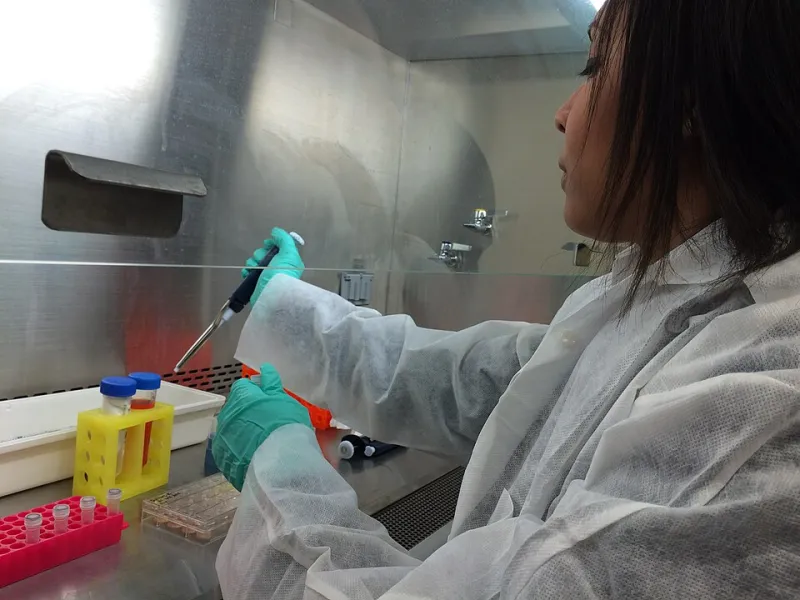
Photo: Peter Facey, CC BY-SA 2.0, via Wikimedia Commons
A gene-editing therapy getting an NHS appointment is not the same as a trial readout. The trial may show a promising result in a small group of patients. The NHS pathway asks different questions: who is eligible, who pays, who follows patients up, and what happens when the clinic letter arrives. For patients, carers and referrers, the gap between the press release and the appointment is where confusion lives.
This is a reading guide, not medical advice. It is an audit of the plain-English gaps that UK patients and carers should watch for as gene-editing therapies move from research headlines into NHS conversations in 2026.
What an NHS appointment can mean
A gene-editing therapy can reach patients through several routes. It might be a clinical trial, a specialist referral, a licensed treatment commissioned by NHS England, or a treatment available only through a managed-access arrangement. Those routes are not interchangeable. Ask which one you are being offered. Ask whether the appointment is research, standard care or something in between.
If the answer is unclear, ask again. A patient information leaflet should say whether the treatment is licensed, whether it is part of a study, and whether the NHS is funding it. It should also say what happens if you say no. Consent is not consent if the alternatives are foggy.
MHRA authorisation is a safety milestone, not a funding decision
The MHRA authorises medicines in the UK. That is a major step. It means regulators have looked at quality, safety and efficacy. It does not automatically mean the NHS will fund the treatment, and it does not mean every patient who might benefit will get it.
A plain-English leaflet should separate authorisation from access. It should explain that a licence is a regulatory green light, not a guarantee of an appointment. If the announcement uses phrases like approved for use, ask approved by whom and for what. The answer matters.
NICE appraisal and the cost-effectiveness question
NICE looks at whether a treatment is clinically effective and cost-effective for the NHS. Its recommendations can be positive, negative or restricted to certain patient groups. Sometimes there is a managed-access agreement, which means more data will be collected while patients are treated.
For patients, the practical question is simple: has NICE recommended this treatment for people like me, and is it commissioned in my area? A national recommendation does not always mean every hospital can offer it immediately. Ask about local commissioning, waiting lists and referral criteria. Ask who decides.
Long-term follow-up: the appointment after the appointment
Gene editing is often described as one-off, but the follow-up is not. Regulators and clinicians will want to monitor patients for years. Ask how long follow-up lasts, where it happens, and what tests are involved. Ask who pays for travel and time off work. Ask what happens if you move to another part of the UK or go abroad.
Long-term follow-up is not a sign that something has gone wrong. It is how uncertainty is managed. A good patient information sheet should say this plainly. It should also say what data will be collected, who will see it and how privacy will be protected.
Fertility and family planning
Fertility questions come up for good reason. Some gene-editing treatments involve conditioning chemotherapy before the edited cells are given. That conditioning can affect fertility. The gene editing itself is usually aimed at body cells, not sperm or eggs, but patients should not have to guess.
Ask whether fertility preservation should be discussed before treatment. Ask whether the conditioning is part of the plan, and what the known effects on fertility are. Ask whether the edit could be passed to children. The answer is usually no for somatic therapies, but the leaflet should say so in words a non-specialist can understand.
Off-target uncertainty in plain English
Gene editing can miss its target. Scientists use assays to look for unintended changes, but no test can prove that nothing unwanted will ever happen. The absence of a detected off-target effect is not the same as proof of perfect precision.
A patient leaflet should explain this without drowning people in jargon. It should say what is known, what is not known, and how uncertainty will be monitored. It should avoid saying the treatment is precise as if that settles the question. Precision is a spectrum, not a guarantee.
The plain-English gaps to audit
When the next UK announcement lands, read it with a pen. Does it say whether the treatment is licensed or experimental? Does it explain NICE status and local access? Does it describe alternatives? Does it mention long-term follow-up, fertility and off-target uncertainty? Does it tell patients where to ask questions?
If the announcement is heavy on hope and light on eligibility, that is a gap. If it uses the word cure without explaining what the trial measured, that is a gap. If it does not say who to contact for advice, that is a gap.
A checklist for the next UK announcement
- Is this trial data, MHRA authorisation, NICE guidance or NHS commissioning?
- Who is eligible, and who is not?
- Is the treatment licensed, and for which condition?
- Has NICE recommended it, and with what restrictions?
- Is it funded in my nation or region, and at which hospital?
- What are the alternatives, including standard care and no treatment?
- What does long-term follow-up involve, and for how long?
- Are fertility effects and family planning discussed?
- What is known and not known about off-target effects?
- Where can I get independent advice before saying yes?
The bottom line
Gene-editing therapies are moving from specialist trial centres into wider NHS conversations. That is a genuine shift, and it deserves clear language. Patients and carers should not have to decode regulatory acronyms to understand what is being offered. The next UK announcement should be read with the checklist above, and the clinic should be asked the questions the press release left out.