Lab-on-a-Chip, Minus the Hype: Five UK Microfluidics Spinouts to Watch
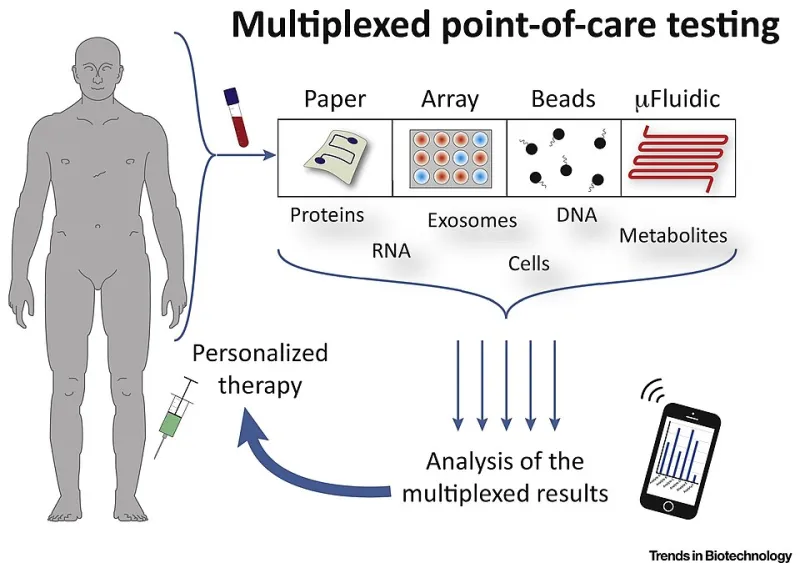
Photo: Dincer, Can, CC BY 4.0, via Wikimedia Commons
Microfluidics has a familiar problem: it looks superb on a conference slide and much less tidy on a hospital bench. A chip that can mix, split and analyse tiny volumes of liquid is a lovely piece of physics. A diagnostic that a busy NHS lab will actually run at 8am on a Monday is a much harder product.
That gap — between lab demo and near-clinical tool — is the one worth watching. So here are five UK university spinouts working in microfluidics and lab-on-chip diagnostics, from Cambridge to Glasgow. We are not ranking them, and funding stages move fast; treat this as a map of the scene, not investment advice.
Why the UK lab-on-a-chip scene is worth a second look
The NHS is under pressure to move more testing closer to patients, cut waiting times and make better use of scarce lab staff. Microfluidics promises smaller sample volumes, faster turnaround and cartridges that can be used outside a central lab. The UK also has a dense cluster of university engineering departments, teaching hospitals and life-science investors. That is a decent recipe for spinouts.
The catch is that a working chip is not a working product. Diagnostics need clinical evidence, manufacturing consistency, regulatory sign-off and a route into NHS budgets. That is why the five below are at very different stages.
The five
1. Sphere Fluidics — Cambridge
What it does: Sphere Fluidics uses picodroplet microfluidics to encapsulate single cells in tiny droplets. That lets researchers screen and sort cells at high throughput, which is useful for antibody discovery, cell line development and single-cell analysis.
Why it matters: It is a pick-and-shovel play. The company is not trying to put a diagnostic in a GP surgery; it sells tools that make drug discovery and bioprocessing more efficient. That is a real market, but it is a lab-tool market.
Funding stage: Venture-backed growth company. It has been through multiple funding rounds and has a commercial customer base.
Hype check: Strong microfluidics, not a near-clinical diagnostic. Watch for adoption in biopharma workflows rather than NHS pilots.
2. Fluidic Analytics — Cambridge
What it does: Fluidic Analytics spun out of Cambridge to commercialise microfluidic diffusional sizing. In plain English, it measures how proteins behave in solution — size, shape and interactions — using very small sample volumes.
Why it matters: Protein characterisation matters for bioprocessing, formulation and biomarker research. If a biologic medicine aggregates or changes shape, that can affect safety and manufacturing. Better measurement tools help teams catch problems earlier.
Funding stage: Privately held, growth-stage instrument company.
Hype check: Research and bioprocessing tool first. It could feed into clinical workflows indirectly, but it is not a point-of-care test.
3. Osler Diagnostics — Oxford
What it does: Osler Diagnostics is an Oxford spinout developing a handheld blood-testing platform. The idea is to take laboratory-grade immunoassays and shrink them into a cartridge-based system that could be used closer to the patient.
Why it matters: Blood tests are the backbone of NHS diagnostics. A reliable handheld analyser could support urgent care, community clinics and remote settings — if the analytical performance holds up and the economics work.
Funding stage: Venture-backed, clinical-stage diagnostics company.
Hype check: Closest to the near-clinical end of this list. The things to watch are analytical validation, clinical studies and whether NHS commissioning pathways can accommodate a new platform.
4. Atlas Genetics — Bath (now part of Binx Health)
What it does: Atlas Genetics began as a University of Bath spinout and developed point-of-care molecular diagnostics using microfluidic cartridges. Its technology has since moved under the Binx Health umbrella.
Why it matters: Molecular testing at the point of care is a big prize: faster results for infections, less reliance on central labs and better antimicrobial stewardship. But it is also a crowded field with strong incumbents.
Funding stage: Corporate/acquisition stage rather than a standalone early-stage spinout.
Hype check: Near-clinical in intent, but commercial adoption depends on menu breadth, reimbursement and NHS procurement. Watch for UK pilot data rather than press releases.
5. Novarum DX — Glasgow
What it does: Glasgow-based Novarum DX, with university roots in the city, makes smartphone-based readers for lateral flow tests. It is lab-on-chip adjacent rather than pure microfluidics, but it belongs in the same conversation about decentralised diagnostics.
Why it matters: Lateral flow tests are cheap and familiar, but reading them by eye is subjective. A connected reader can capture results, add timestamping and send data onward — useful for sexual health, infectious disease and remote monitoring.
Funding stage: Privately held SME.
Hype check: The reader is not the hard part; the hard part is the assay, the clinical pathway and data governance. Watch for partnerships with test developers and NHS trusts.
The near-clinical shortlist
If you are a student or a biotech professional trying to separate substance from slideware, use this rough filter:
- Lab tool: revenue from research labs; success measured by publications and repeat customers.
- Near-clinical: analytical validation, clinical studies, quality management system, regulatory plan and a plausible NHS route.
- Lab demo: a beautiful chip, a conference poster and no clear path to manufacture at scale.
On that filter, Osler and the Binx/Atlas platform are the ones to watch for clinical translation. Sphere Fluidics and Fluidic Analytics are stronger as enabling tools. Novarum sits in the connected-diagnostics lane.
What to watch over the next 12 months
NHS adoption. Look for pilot studies with NHS trusts, not just lab collaborations. The key questions are who pays, who runs the test and how results feed into patient records.
UK regulatory hurdles. Medical devices need UKCA marking and MHRA oversight. In vitro diagnostics need analytical and clinical evidence, plus post-market surveillance. A cartridge that works in a university lab still has to survive a quality audit.
NICE and commissioning. Even a clever test needs a health economics case. NICE diagnostics guidance, local commissioning and NHS England programmes can make or break adoption.
Manufacturing. Microfluidic cartridges are fiddly. Can a company scale up without losing yield? Can it keep costs low enough for the NHS? That is often the real bottleneck.
Funding climate. Deep-tech diagnostics is capital-intensive. Grants from Innovate UK and research councils help, but clinical validation is expensive. Consolidation is likely.
Microfluidics does not need more hype. It needs more products that survive contact with a clinic. The five above are a decent place to start watching.
