Paperwork Before Plasmids: A 30-Minute Contained-Use Audit for UK GM Labs
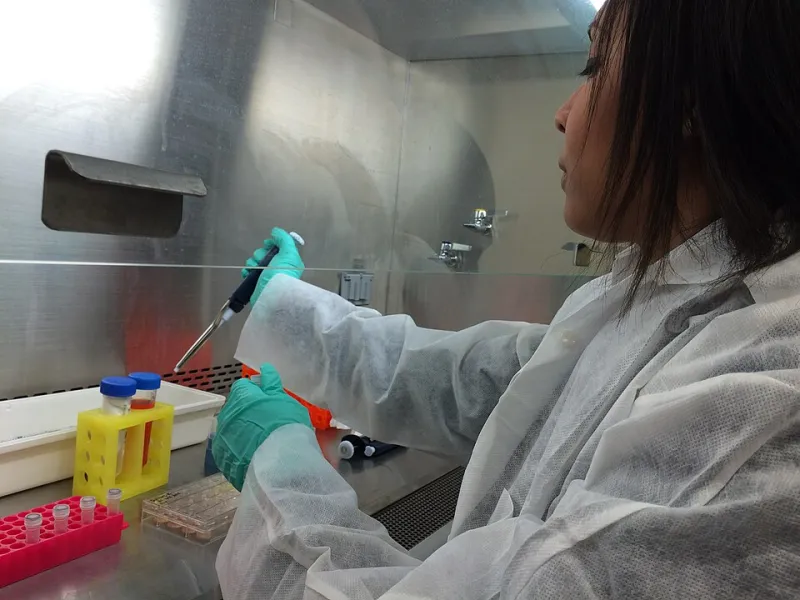
Photo: The U.S. Food and Drug Administration, Public domain, via Wikimedia Commons
A CRISPR experiment can begin with a small tube and a big assumption: someone else has sorted the paperwork. In UK labs working with genetically modified organisms, that assumption is a biosafety risk. Containment is not only a sealed cabinet and a closed door. It is a paper trail that shows the work was assessed, notified and approved under the right conditions.
The UK framework in one paragraph
Contained use of GMOs in the UK sits under the Environmental Protection Act 1990 and the Genetically Modified Organisms (Contained Use) Regulations 2014. The Health and Safety Executive is the competent authority for contained use. Activities are risk-assessed and classified, usually from class 1 to class 4, with controls matched to the class. Depending on the activity, notifications to HSE and local genetic modification safety committee review may be required. This article is an editorial checklist, not legal advice. Your biological safety officer and HSE guidance are the sources to follow.
The key point for a busy lab is simple: a lab induction is not a notification. A generic risk assessment is not a construct-specific assessment. A committee email chain is not the same as a signed-off record.
Audit 1: Know what is in the freezer
Start with an inventory. List the host organism, the vector, the insert, the donor material and any selection markers. Include CRISPR components, viral vectors and cell lines. A construct that arrived as a gift, a leftover from a previous project or a service provider's kit still needs to be in the assessment. If the inventory says E. coli with a plasmid, but the bench has a lentiviral vector, the paper trail is already behind.
Check the date on the inventory and the name of the person who last updated it. In shared labs, the gap between the freezer map and the paperwork is where surprises live.
Audit 2: Check the risk assessment and class
Read the risk assessment for the specific construct, not just the host. Does it state the containment class? Does it explain why that class was chosen? Are the controls practical: bench rules, equipment, waste inactivation, access restrictions and training? Is there a version number and a signature?
Be suspicious of copy-and-paste assessments. A class 1 cloning project and a class 2 viral vector project should not share the same generic text. If the construct has changed since the assessment was written, or the project has moved to a different room, the assessment may need an update. A 30-minute audit cannot classify a new organism, but it can spot a mismatch.
Audit 3: Find the notification and local sign-off
Ask for the HSE notification reference and the date the activity was notified. Check that the activity described in the notification matches the work on the bench. If your lab relies on a premises notification, make sure the activity itself is covered. For work that requires local GM safety committee review, find the minutes or sign-off that record the construct, the class and any conditions. A committee meeting note that says approved in principle is not the same as a documented decision with conditions.
Keep these records with the project file, not in someone's inbox. When a new starter asks why the cabinet has a certain class label, the answer should be findable in under five minutes.
Audit 4: People, training and access
Containment depends on the person at the bench at 6pm. Check training records for everyone on the project, including visitors and rotation students. Do they know the spill procedure? Do they know which waste stream applies? Is access to the lab restricted in line with the assessment? Is there a named supervisor and an emergency contact?
This is not about signing a form once a year. It is about whether the person thawing the tube can explain the stop points. If they cannot, the paperwork is not doing its job.
Audit 5: Follow the waste
Walk the waste route. Where does solid GM waste go? Is inactivation validated and logged? Are autoclave cycles recorded? Who collects the waste, and what does the transfer note say? If liquid waste goes down the sink, is that permitted by the risk assessment and local rules? If samples move between buildings, is the transfer documented?
A containment audit that stops at the cabinet misses half the story. The waste route is where administrative gaps become environmental ones.
Audit 6: Version control and change management
Put the protocol, risk assessment, notification, committee sign-off and training records in one place. Give the folder a date. When the construct changes, the assessment may need to change too. When a new person joins, their training record should join the folder. When a project ends, the waste and sample records should close the loop.
A simple rule: if you cannot find the current version in 30 minutes, the project is not audit-ready.
The 30-minute checklist
- Host, vector, insert and CRISPR components listed.
- Construct-specific risk assessment found and in date.
- Containment class stated and matched to lab controls.
- HSE notification reference checked against the activity.
- Local GM safety committee sign-off or minutes filed.
- Training records current for everyone at the bench.
- Waste inactivation and autoclave logs available.
- Sample transfer and access restrictions documented.
- Emergency and spill procedures visible.
- One project folder with version date and owner.
When something is missing
Do not start the experiment and hope the gap closes itself. Tell your supervisor or biological safety officer. Most gaps are fixable: a missing signature, an outdated assessment, a training record that was never filed. The fix is usually faster than the cleanup after an inspection or a spill.
Containment is a paper trail because biosafety is a system, not a personality. The tube is small. The trail should be clear.