The Fifty-Grand Sequencer: What UK Labs Actually Pay After the Demo
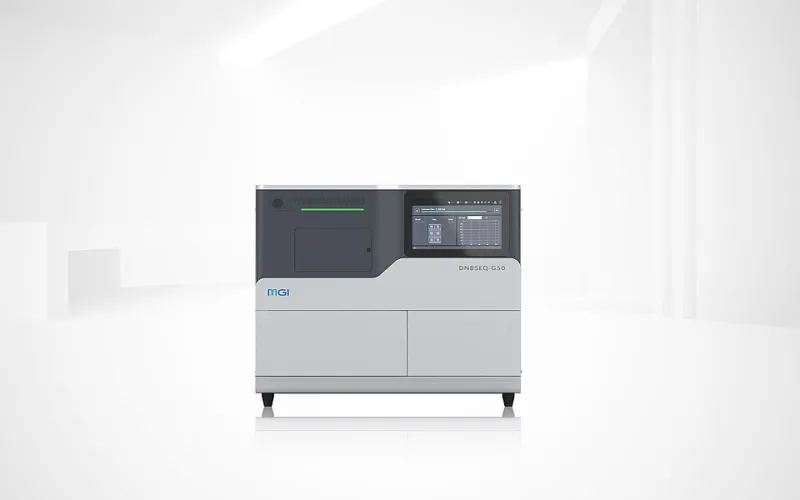
Photo: RPSkokie, CC BY-SA 4.0, via Wikimedia Commons
Benchtop sequencers have a way of making a lab feel futuristic. They are compact, they hum politely, and in a demo room they produce beautiful data from tidy libraries. The trouble is that the demo room is not your bench, and the sticker price is not your three-year cost. In 2026, entry-level benchtop systems are still marketed around the £50K mark, but the real budget conversation starts after the purchase order.
This guide is for UK academic groups, core facilities and early-stage biotech teams comparing small sequencers. It is not a ranking. It is a list of the questions that turn a shiny instrument into a line item you can defend to a finance officer, a grant panel or a lab manager.
The demo room is not the bench
Vendor demos tend to use high-quality control DNA, fresh reagents and a specialist who knows exactly which button to press. That is fine for showing what the instrument can do. It is not fine for predicting what your lab will do on a Tuesday afternoon with a rushed extraction and a sample that has been through the freezer twice.
Ask for a run on your own material, or at least a realistic proxy. Ask how long library prep takes, how much hands-on time is needed, and what happens when a run fails. A sequencer that saves money on reagents but eats a day of staff time every week is not cheap. A system that needs a dedicated bioinformatician before anyone sees a result is not plug-and-play.
The £50K is only the entry ticket
The purchase price is the easy number to compare. The awkward number is total cost of ownership. A £50K instrument can easily become an £80K to £120K commitment over three years once you add installation, a uninterruptible power supply, network upgrades, service cover, consumables, analysis software and staff training.
Ask for a three-year cost model in writing. Include the expected number of runs per year, the cost per run at realistic batch sizes, and the cost per sample when you are running half-empty flow cells because your samples arrive in dribs and drabs. Low-throughput labs often pay a premium for the convenience of benchtop sequencing, and that is fine as long as it is a conscious choice.
Service contracts: read the small print
A service contract is not a formality. It is where response times, parts, travel and uptime live. Ask whether first-line repair is included, whether a loan unit is available, and whether there is an uptime guarantee with any teeth. Ask what happens if the instrument fails during a grant deadline or a clinical validation run.
Check renewal caps. A cheap first-year contract can become an expensive habit if renewal increases are not capped. Check whether the contract requires you to buy vendor consumables, and whether third-party reagents are allowed. In UK labs, service records and calibration evidence also matter for accreditation. If the instrument sits in a UKAS-accredited environment, the paper trail is part of the product.
Consumables, flow cells and shelf life
Consumables are where budgets quietly leak. Ask for the shelf life of kits, the storage conditions, the minimum order quantity and the shipping costs. Ask whether a flow cell can be reused, and if so, what the failure rate looks like after reuse. Ask what happens when a reagent batch is delayed in customs or a courier leaves a box on a warm loading bay.
Map consumable costs to your grant cycle. A cheap instrument with expensive locked reagents can be a poor fit for a lab that runs small batches. A slightly dearer instrument with cheaper runs may win over three years. The spreadsheet should show both.
Data is not free
Benchtop sequencers generate more data than many new users expect. Ask for the raw data size per run, the recommended storage and backup arrangement, and the compute needed for base calling and analysis. Ask whether analysis happens on the instrument, on a local server or in the cloud. Cloud is not automatically cheaper, especially when egress fees and long-term archiving are included.
If the lab handles human data, the questions get sharper. You need a data retention policy, access controls, audit logs and a route through GDPR and NHS information governance where relevant. A sequencer that produces beautiful files but no sensible data-management plan is only half a purchase.
Accreditation, UKAS and the paper trail
Vendors often say a system is ISO-ready. That phrase means very little on its own. If the work is clinical, you may be working under ISO 15189. If it is testing, ISO 17025 may be relevant. Information security may bring ISO 27001 into the conversation. The instrument needs to fit the quality system, not the other way round.
Ask about validation materials, reference controls, user permissions, electronic signatures and audit trails. Ask whether the vendor can support validation documentation and whether other UK labs have taken the same system through UKAS. A reference site is more useful than a brochure claim.
Questions before you sign a three-year deal
- What is the all-in cost for years one, two and three, including service, consumables and software?
- Can we run our own samples in a demo, and can we see a failed run as well as a successful one?
- What is the realistic hands-on time per batch, including library prep and clean-up?
- What is the cost per sample at our actual batch size, not the vendor's ideal batch size?
- Is the service contract capped on renewal, and what is excluded?
- Are third-party reagents allowed, and does that affect warranty or accreditation?
- How much raw data does a typical run produce, and where will it live?
- Does the system support the audit trails and user controls our quality system needs?
- Can the vendor provide UK reference sites with similar accreditation requirements?
- What is the exit plan if the instrument is discontinued or the lab moves?
The bottom line
A benchtop sequencer is a commitment, not an accessory. Buy for the work you actually have, not the work you hope to have after the next grant. Pilot with a core lab or a shared facility if you can. Get the three-year cost in writing. Then decide whether the £50K instrument is a bargain or the start of an expensive relationship.
For UK labs in 2026, the sensible question is not which sequencer is cheapest on day one. It is which one your team can run, afford and defend for the next three years.