Who Keeps the Keys When a UK Biotech Winds Down? A Ten-Point Handover Audit

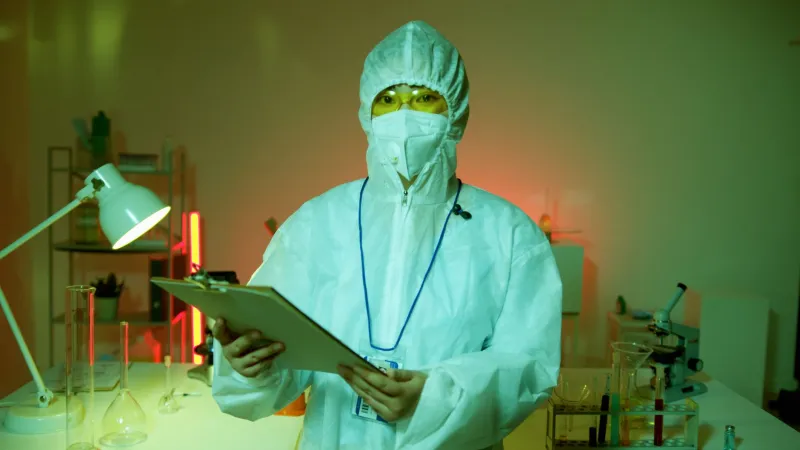
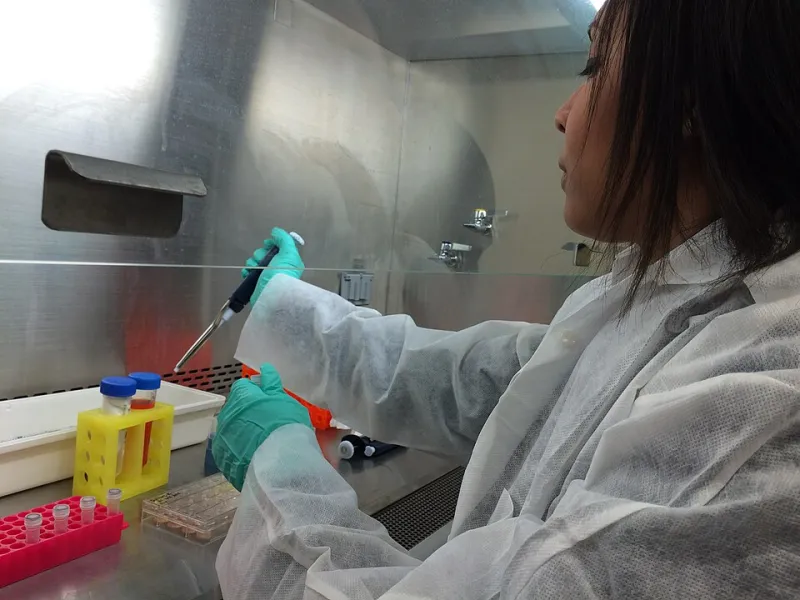
Photo: empty laboratory freezer with frost, scientist reviewing documents, UK biotech office, via wallpapers.com
It rarely arrives as a dramatic announcement. More often it is a Companies House filing, a quiet calendar invite, or a Slack message from a founder who has been unusually absent. By the time the notice of intention to appoint administrators lands, the science has not disappeared — it has been frozen in place, sometimes literally, in a minus-eighty that nobody has defrosted since the last grant review.
UK biotech spinouts fail for ordinary reasons: a clinical candidate that did not read out, a funding round that slipped, a partnership that evaporated. But the paperwork of failure is unusually messy in the life sciences, because the assets are not just desks and laptops. They are samples under a Human Tissue Authority licence, datasets governed by material transfer agreements, and a GitHub organisation whose admin login belongs to someone who left eighteen months ago.
This is not legal advice. It is a lab-level audit — the sort of thing a postdoc, PhD student or junior scientist can run through in an afternoon before the liquidator's team arrives with clipboards.
Administration is not the same as closure
When a company enters administration, control of its assets passes to appointed administrators. In a liquidation, a liquidator realises those assets for creditors. Either way, the company — not the people who did the work — is the legal entity that holds most of the rights. Your employment contract, your ethics approval and your name on a paper do not automatically make you the owner of the freezer or the data controller for the cohort study.
That distinction matters because early-career scientists often assume their work travels with them. In practice, it travels only as far as the contracts allow.
The ten-point handover audit
1. GDPR controller status. Who is the data controller for your study? Is it the company, a university partner, or a joint arrangement? If you are named as a researcher on an ethics application, that does not make you the controller. Ask for the data processing agreements and the Article 28 processor contracts. Without them, transferring personal data to a new employer is not a tidy file copy — it is a compliance question.
2. UK Biobank and cohort-derived data. Data accessed through UK Biobank or similar resources usually comes with a material transfer agreement and a non-transferable licence. You cannot simply carry derived datasets to a new institution. Check the agreement, then check it again. Re-application is often the only legitimate route, and it takes time.
3. Freezer ownership and sample custody. Who owns the minus-eighty? If the lab is in a leased building, the freezer may be a fixture, a leased asset or the landlord's problem. Human tissue samples held under an HTA licence are not ordinary goods; transferring them usually requires a licence variation and a named designated individual at the receiving end. Animal-derived samples and hazardous materials carry their own restrictions.
4. Material transfer agreements. Inbound MTAs frequently prohibit transfer to a third party without the provider's written consent. If your project depends on a cell line or plasmid received under an MTA, that consent is a document you need before the company stops answering emails.
5. Open-source licence traps. If your codebase depends on GPL-licensed components, you cannot quietly relicense it as proprietary on the way out. Copyleft obligations travel with the code. Conversely, permissive licences such as MIT or Apache 2.0 may allow you to fork and continue — provided you keep the notices intact. Audit your dependency tree and your contribution history before you assume the code is yours to take.
6. Cloud accounts and admin credentials. Domain names, GitHub organisations, AWS or Azure billing accounts, electronic lab notebook tenancies and ORCID links are all assets with logins. Personal accounts are not a substitute for organisational ones, but neither is locking yourself out of the only copy of your data. Export what you are entitled to export, and document who holds the keys.
7. Electronic lab notebooks and raw data. Proprietary ELN platforms may become inaccessible once the subscription lapses. A PDF export is not raw data. If you can, export in open formats — CSV, plain text, open image formats — and keep a manifest that maps files to experiments. Future you, and future reviewers, will be grateful.
8. Grants and contracts. Innovate UK, UKRI and charitable funders may have terms covering asset disposal, continuation of work or return of equipment. Studentship funding may sit with a university partner. Check the grant conditions and ask whether a novation is possible before assuming the project dies with the company.
9. IP assignments and inventorship. Employment contracts and spinout incorporation documents usually assign IP to the company. University background IP may be licensed in, not owned. Inventorship on a patent is a separate question from authorship on a paper. If you believe you are an inventor, say so early and in writing.
10. Communications and publications. Preprints, conference abstracts and co-author agreements need a coordinated message. Do not publish data that is subject to a restricted licence. Do notify collaborators, especially those who supplied materials or co-funded the work. A short, factual email is better than a rumour.
What you can do before the liquidator logs in
Keep your own CV and ORCID up to date — those are yours. Export your notebooks and code on a schedule you control, within the limits of your agreements. Know which ethics approval covers your work and who the controller is. Keep copies of MTAs and licence terms in a folder you can access after your company email is switched off. And talk to your institution's research office early; they have seen this before, even if your founder has not.
The freezer is not a filing cabinet, and a server login is not a souvenir. When a UK biotech winds down, the science survives through contracts, exports and a bit of unglamorous preparation. Start the audit while the lights are still on.