The Biofoundry Bench Pass: Five UK Shared Labs Open to Early-Career Scientists

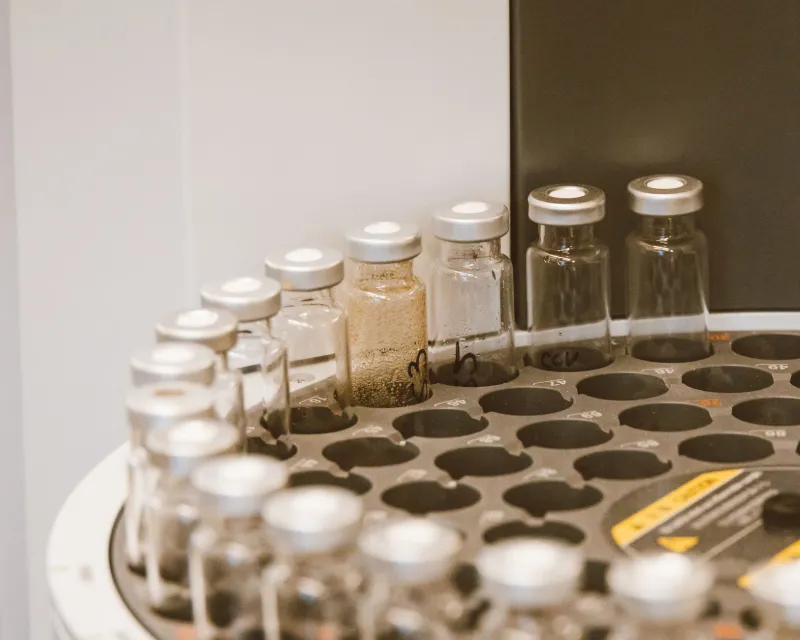
Photo: synthetic biology biofoundry automation liquid handling robot laboratory UK, via coloringus.com
Biofoundries sound like places you need a grant, a security pass and three postdocs to enter. In practice, the UK’s shared synthetic biology facilities are more varied — and more approachable — than the name suggests. They are not magic wand factories, and none will let you wander in off the street. But several run pilot schemes, training and project support for students, early-career researchers and small companies. Here are five UK biofoundries worth putting on your radar in 2026, with a beginner-friendly project idea for each.
What a biofoundry actually does
A biofoundry is a lab built around the design-build-test-learn cycle. You design a DNA construct, build it using automated or high-throughput methods, test the resulting strain or protein, and use the data to improve the next round. The appeal is speed and reproducibility: liquid-handling robots, standardised assembly methods and experienced staff can do in a week what might take months in a small academic lab.
Access usually starts with a project enquiry, not a booking form. Facilities want to know what organism you are using, what you are trying to build, what biosafety level is involved, and whether the project is feasible. From there you may get a feasibility call, a quote, a training requirement or a pilot run. Costs vary widely. Expect quotes in the hundreds to low thousands of pounds for a small pilot, with academic rates often lower than commercial rates. Some facilities have pump-priming vouchers or collaboration schemes; ask early.
1. Earlham Biofoundry, Norwich
What it offers: High-throughput DNA assembly, microbial strain construction and automation-supported synthetic biology. It is part of the Norwich Research Park ecosystem, so there is strong plant and microbial science nearby.
Booking and training: Start with an enquiry and a design review. You will usually need to show that your construct is suitable for their workflows. Training is often project-specific rather than a generic course.
Realistic costs: Quote-based. A small academic pilot may be affordable with a supervisor’s support, but do not assume it is free. Ask about setup costs, consumables and staff time.
Beginner project: Build a small panel of promoter-green fluorescent protein constructs in E. coli and compare expression. It teaches DNA assembly, transformation, colony picking and basic measurement without requiring a complex organism.
2. Edinburgh Genome Foundry, University of Edinburgh
What it offers: Automated DNA assembly, strain engineering and synthetic biology workflows, with a strong focus on standardisation and scale. It is a good example of a foundry that behaves like an engineering platform rather than a single lab.
Booking and training: Expect a staged conversation: feasibility, design, quote, then scheduling. Training may cover their assembly standards and sample submission requirements. If you are a student, your supervisor usually needs to be involved because of biosafety and institutional sign-off.
Realistic costs: Project-dependent. A simple assembly and verification run is cheaper than a full design-build-test campaign. Ask whether there is an academic access route or a collaborative grant scheme.
Beginner project: Assemble a set of fluorescent reporter constructs in yeast and check them by colony PCR and fluorescence. It is a manageable introduction to foundry-style assembly and verification.
3. London Biofoundry, Imperial College London
What it offers: Automation, DNA assembly, strain engineering and access to a London-based synthetic biology network. The advantage for many students is geography: it is easier to attend training or meetings if you are already in the South East.
Booking and training: Access is usually through a project discussion rather than a public calendar. Be ready to explain your biological system and your assay. Training may be required before you can use equipment independently.
Realistic costs: Likely to be quote-based, with different rates for internal, academic and commercial users. A pilot project is the sensible first step. Ask what is included in the quote — consumables, staff time, data analysis and repeat runs are not always bundled together.
Beginner project: Build and test a simple colorimetric or fluorescent biosensor in E. coli. The project is small enough to fit a pilot run but teaches the full design-build-test loop.
4. Manchester Biofoundry and SYNBIOCHEM, University of Manchester
What it offers: Synthetic biology and metabolic engineering support, often with analytics attached. Manchester’s strength is the combination of strain construction with chemical analysis, which matters if your project produces a small molecule rather than a fluorescent protein.
Booking and training: Start with a feasibility discussion. Foundry staff will want to know whether your target molecule is toxic to the host, how you plan to measure it, and whether the analytics are in place. Training is likely to be hands-on and project-specific.
Realistic costs: Quote-based. Analytical work can add cost, so ask for a breakdown before you commit. A small proof-of-concept run is usually more sensible than a large library screen.
Beginner project: Express a small panel of enzyme variants in E. coli and compare activity with a simple colorimetric assay. It is a gentle introduction to strain engineering and analytical measurement.
5. GeneMill, University of Liverpool
What it offers: DNA assembly, gene library construction and synthetic biology services. GeneMill is designed to support researchers who need reliable construct building without setting up a full cloning pipeline themselves.
Booking and training: The usual route is an enquiry, a design check and a quote. If you are new to foundry work, ask what training or documentation is available for sample submission and quality control.
Realistic costs: Project-based. A small gene library or assembly run may be within reach for a student project, but sequencing and verification costs should be included in your budget from the start.
Beginner project: Order or assemble a small library of gene variants, transform them into E. coli, and verify a subset by sequencing. It teaches you how to design a library, handle samples and check that the build actually worked.
How to book without overpromising
Before you email a biofoundry, write a one-page project summary. Include the organism, the biosafety level, the DNA design, the assay, the number of samples, the timeline and your budget. Be honest about your experience. Foundries are used to beginners, but they are not set up to teach you basic pipetting from scratch.
Ask three questions early: What training is required? What is included in the quote? Who owns the data and the resulting strains? The answers will tell you whether the facility is a good fit.
The honest caveats
Biofoundries are not plug-and-play. Training takes time, queues exist, and a failed assembly still costs money. Genetically modified organism rules apply, and your institution’s biosafety committee will need to approve the work. If you are a student, you will almost certainly need a supervisor or principal investigator attached to the project.
But the access gap is smaller than many people think. A well-scoped pilot project, a clear design and a polite enquiry can get you further than a vague email asking to “use the robots”.
Bottom line
You do not need a PhD to start a conversation with a UK biofoundry. You do need a sensible project, a supervisor, a budget and a willingness to learn the facility’s workflow. Pick one, ask for a feasibility call, and start small. The bench pass is not automatic — but it is more reachable than the name suggests.