Sixteen-S Versus Shotgun: What Your Gut Kit Actually Sequences
It's a Saturday, you're in a pharmacy queue, and between the meal deal and the vitamin D there's now a box promising to decode your gut. A swab, a tube, a freepost label, and fourteen days later a dashboard full of Latin. Direct-to-consumer microbiome testing has quietly become a normal UK purchase — and, like most normal purchases, the marketing runs a good few lengths ahead of the science.
None of this means the kits are useless. It means the word "microbiome test" is doing an enormous amount of work, covering methods that differ in cost, resolution, and what question they can even attempt to answer. So let's open the box.
What's actually in the tube
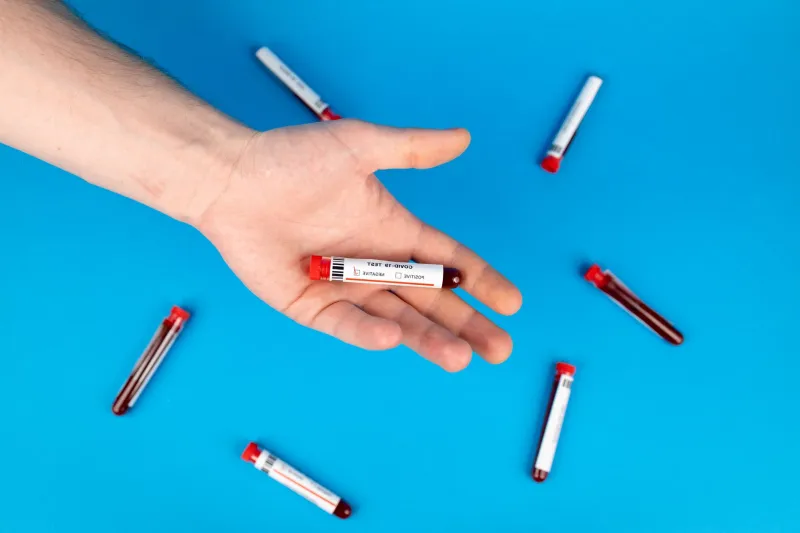
Most kits ask for a stool sample, though a minority still use a rectal swab. Either way, the sample is stabilised in a preservative buffer and posted at ambient temperature — which is the first thing worth knowing, because your gut is an anaerobic environment and the moment material leaves it, the composition starts to shift. Good kits use a preservative that fixes the nucleic acids in place. Cheap kits rely on you posting promptly and on the postal system behaving itself. A sample that sits in a depot over a warm weekend is a different sample from the one you produced.
That's not a scandal, it's a constraint. Every kit on the market is sequencing a slightly historical, slightly perturbed version of your gut. The question is whether the method is robust enough for that not to matter.
16S versus shotgun: two different questions
This is where most confusion starts, and it's worth getting straight before you spend anything.
16S rRNA sequencing targets a single gene found in bacteria and archaea. The gene has conserved stretches (so you can bind primers to them) and variable stretches (so you can tell taxa apart). It's cheap, it works on low-input samples, and it typically resolves to genus — sometimes species, often not. It also amplifies whatever the primers happen to like, which means the answer you get depends partly on the primers chosen. Two labs using different primer sets can report different proportions from the same stool.
Shotgun metagenomics sequences everything in the sample — bacteria, fungi, viruses, and you. It can reach species and strain level and can report genes and pathways rather than just names on a list. It's also several times more expensive, and a large chunk of the reads (often the overwhelming majority) are human, because your stool contains your own cells. Depth matters enormously here.
So when a 16S result says you're low in Akkermansia and a shotgun result on the same sample disagrees, neither has necessarily failed. They're different instruments reading different signals with different biases. What you should be suspicious of is a company that reports both types of output with identical confidence.
The unglamorous middle: bioinformatics
Between the sequencer and your dashboard sits a pipeline, and it makes choices on your behalf. Which reference database? How are reads assigned when a species isn't in the database? Is "unclassified" reported, or quietly absorbed? Is the relative abundance normalised, and against what?
Relative abundance is the specific trap. Percentages always sum to 100, so a bloom in one taxon mathematically shrinks everything else. Your Bifidobacterium hasn't fallen; something else has risen. Kits vary in how clearly they flag this, and dashboards love a bar chart that implies decline.
Your data has a postcode too
Under UK GDPR and the Data Protection Act 2018, microbiome data sits in an awkward category. It isn't genetic data about you in the inherited sense, so the usual safeguards around DNA testing don't map cleanly onto it. But strain-level composition is arguably identifying, and it can imply health information — which pushes it towards special category territory and the higher bar that comes with it.
Practical questions for any provider: where are the servers, and does data leave the UK? Is a US parent company involved, and does that change your legal recourse? What's in the consent flow beyond a pre-ticked box? Will aggregated data be licensed onward, and can you tell which category you've agreed to? The insurance moratorium that restricts UK insurers' use of predictive genetic test results doesn't cover microbiome data, which is worth knowing before you assume it does.
Also: any kit asking you to consent to "research use" is asking for something. That's not automatically bad. It's just a decision, not a formality.
When a kit is actually worth the money
Three situations where the spend makes sense. You're enrolled in a study and the sequencing is part of the protocol. You want to track your own trend over time using the same kit, same collection routine, same time of day — the absolute numbers will be shaky, but a consistent method gives you a usable line. Or you're simply curious and can afford for the answer to be interesting rather than actionable.
Three where it doesn't. Diagnosing IBS, where UK clinical practice still works from symptom criteria rather than a stool profile. Hunting for "dysbiosis", a word with no agreed clinical threshold. And picking a probiotic on the strength of a bar chart, since the evidence base for strain-specific effects is far narrower than the market suggests.
If you have persistent gut symptoms, the useful test isn't the one on the pharmacy shelf — it's the conversation with your GP, and possibly a faecal calprotectin to rule out inflammation. Microbiome kits aren't in NHS routine pathways, and that's a judgement, not an oversight.
A five-line pre-purchase check
- Which method — 16S or shotgun — and what resolution does the report claim?
- Does it explain its reference database and how it handles unclassified reads?
- Is sample handling specified, including how long the sample has before it degrades?
- Who owns the data, where does it live, and can you get it deleted?
- Is there a named clinical lead, and does the report avoid diagnostic language?
That last one matters more than it looks. A test that tells you it's a wellness product is being honest about its regulatory status. One that implies a diagnosis is drifting into territory the MHRA takes an interest in.
The bottom line
A gut microbiome kit is a measurement, not an oracle — and the measurement is narrower than the packaging implies. Buy it for curiosity or for a consistent personal baseline. Don't buy it to replace a clinician, and don't assume two kits will agree just because they both sequence stool. They may not even be asking the same question.