Viruses on the Ward: How to Read the UK’s 2026 Phage Trial Wave
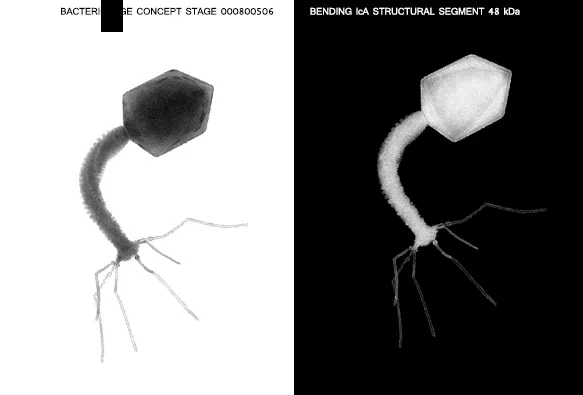
Photo: Kukski, CC BY-SA 4.0, via Wikimedia Commons
Bacteriophage therapy has a habit of arriving in the UK press as a miracle story: a patient with a stubborn infection, a bespoke virus cocktail, and a dramatic recovery. Those stories matter, but they are not the same as evidence. As of November 2026, phage therapy is still not a routine NHS treatment. What is changing is the number of UK groups trying to move it from compassionate-use case reports into properly designed clinical studies. Here’s a Byte Size Bio field guide to reading that shift without getting swept up in the hype.
First, what is phage therapy?
Bacteriophages — phages for short — are viruses that infect bacteria. They do not infect human cells. In therapy, clinicians use one or more phages that can recognise and kill the bacterium causing an infection. The appeal is obvious: phages are precise, they can be selected against antibiotic-resistant strains, and they can be given as personalised cocktails.
The catch is just as obvious. A phage that works against one strain may do nothing against another. That means laboratories often need to match phage to the patient’s own bacterial isolate, which is slower and more labour-intensive than writing a prescription for a broad-spectrum antibiotic. Phages also need to be manufactured to medicine-grade standards, characterised, and dosed in ways that reach the infection site. In the UK, that means navigating medicines regulation, clinical trial approvals and NHS governance — not just a clever lab result.
Why the NHS question is messy
The UK has long allowed unlicensed medicines to be supplied in limited circumstances, and clinicians can sometimes use phage preparations under special arrangements. That is not the same as routine commissioning. For phage therapy to become an ordinary NHS option, there needs to be enough clinical evidence on safety, dosing, manufacturing and benefit — and a regulatory route that makes sense for a product that may be personalised to one patient.
That is why the current UK picture is a patchwork. You will find laboratory groups with phage collections, clinicians who have used phage therapy on a compassionate-use basis, and trial teams trying to turn those experiences into studies with protocols, controls and pre-specified endpoints. All three are useful. They are not interchangeable.
Where the UK action is
Several UK centres have been building phage capacity. Groups linked to the University of Leicester, the University of Exeter, the University of Liverpool, Imperial College London and Great Ormond Street Hospital have been involved in phage research, clinical case work or trial preparation. The exact list changes as funding and staff move, so treat this as a map of where to look rather than a fixed league table.
The more useful question is not “which centre is best?” but “what kind of study is this?” A single-patient compassionate-use report tells you that something was tried. A phase 1 safety trial tells you whether a product can be given without obvious harm. A randomised controlled trial asks whether it works better than the comparator. Each answers a different question.
Trials worth watching in 2026
You do not need to memorise trial names. You need to know the themes. Search UK trial registries, ISRCTN and ClinicalTrials.gov for phage studies in these areas:
- Inhaled phage for cystic fibrosis or bronchiectasis. These studies tend to focus first on safety, tolerability and bacterial load in the lung.
- Topical phage for chronic wounds and ulcers. Wound infections are a practical testing ground because samples are easier to take and local delivery is more straightforward.
- Personalised phage for complex bone, joint or device infections. These are often small, hard-to-run studies where the phage is matched to the patient’s own bacterial isolate.
- Phage-plus-antibiotic combinations. The interesting question is often not “phage alone?” but “does phage make the antibiotic work again?”
Registry entries are dry, but they are more reliable than a conference slide or a press release. Check the status, the sponsor, the primary endpoint and whether the study is recruiting.
A student’s checklist for separating signal from story
When you read a phage paper or news item, ask:
- Was this a trial or compassionate use? A compassionate-use case can be ethically important and still be weak evidence of effectiveness.
- How were patients selected? Were these consecutive cases, or the successes that were easiest to write up?
- Was the phage matched to the bacteria? How was that done, and was the target bacterium confirmed?
- What else changed? Were antibiotics, wound care or surgery altered at the same time?
- What was measured? Bacterial clearance, clinical improvement and safety are different endpoints.
- Was there a comparator? Without one, improvement may reflect time, surgery or standard care.
- Were safety data reported properly? Look for adverse events, not just “well tolerated”.
- Could you reproduce the dosing? If the paper does not say what was given, how often and by what route, be cautious.
- Was the study registered and peer reviewed? Preprints are useful, but they are not the final word.
- Who funded it? Commercial interest does not invalidate a study, but it is worth knowing.
What to do with a promising case report
Do not ignore case reports. They can flag a signal, especially in infections where options are running out. But do not cite them as proof that phage therapy “works” in general. Use them to ask better questions: Which bacterium? Which phage? Which infection site? What dose? What happened next?
For students, the most useful skill is not memorising the phage literature. It is learning to sort evidence by study design. A well-run UK trial with a clear endpoint is worth more than a dozen dramatic anecdotes — even if the anecdotes get the headlines.
Bottom line
Phage therapy is genuinely interesting, and the UK is slowly building the clinical infrastructure to test it properly. But in 2026 it remains an experimental area with a messy evidence base. Read the registry, check the endpoint, and keep the word “compassionate” in mind. Compassion is good. It is not the same as a control group.