Before You Say Yes to the Newborn Genome Study: A Five-Question Kitchen-Table Guide

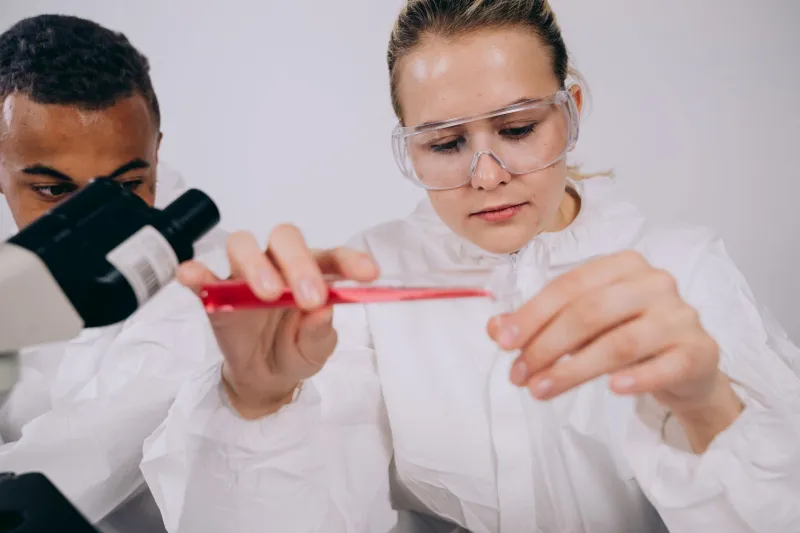
Photo by Photo by Hu Chen on Unsplash on Unsplash
Most UK parents meet the newborn blood spot test before they meet the word 'genome'. A midwife warms a heel, pricks it, fills five circles on a card, and the card goes to an NHS lab. That is the newborn blood spot screening programme: nine rare but serious conditions, one familiar heel prick.
Then comes a different invitation. In 2026, the NHS newborn genomic research programme — often called the Generation Study — asks parents whether their baby can join a study that reads far more DNA than the heel prick. It is not a bigger version of the same test. It is research, with separate consent, separate limits and separate questions.
Here is a parent-facing question sheet, plus notes for the lab staff and research nurses who will hear these questions at 2am.
First, separate the two tests
The heel-prick test is NHS screening. It is offered to every baby in the UK, usually around day five, and it looks for a fixed list of conditions: sickle cell disease, cystic fibrosis, congenital hypothyroidism, phenylketonuria and others. It is designed to find babies who need treatment quickly. It is not a full DNA read.
The newborn genomic study is research. It uses whole-genome sequencing — reading the order of DNA letters — to look for changes linked to rare genetic conditions that could affect a child early in life. It does not replace the heel prick. Parents can say yes to one, both or neither. The heel prick should still happen even if a family declines the study.
What whole-genome sequencing adds — and what it doesn't
A genome is a lot of information. Whole-genome sequencing can spot changes that the heel-prick panel does not test for, including some rare conditions where early treatment or monitoring matters. That is the potential benefit: a child might get earlier care, or a family might get an explanation for a problem that would otherwise take years to diagnose.
But it is not a crystal ball. The study does not look for every possible genetic condition. It is not designed to predict common adult diseases, most adult-onset conditions, or how tall your child will be. It will not detect infections, birth injuries, environmental exposures or the many health problems that have nothing to do with a single DNA change. Some genetic changes are missed by current methods, and some results are simply not clear.
No test guarantees a 'clean' bill of health. That sentence is worth saying out loud.
Consent is a conversation, not a signature
Joining the study is voluntary. A parent can decline without giving a reason, and declining should not affect the baby's NHS care. Consent should cover what is being tested, what kinds of results may come back, how samples and data are stored, who can access them, and whether a family can withdraw later.
Data storage is where generic reassurance is not enough. Ask where the data sits, how it is pseudonymised, who approves access, how long it is kept, and whether any of it could be used in future research. The answers should be specific enough for a parent to repeat them at home. If the person consenting cannot answer, they should know who can.
The VUS conversation: uncertain is not the same as unwell
A variant of uncertain significance, or VUS, is a DNA change where the evidence is not strong enough to say it causes disease or is harmless. In a newborn context, that uncertainty can feel especially heavy. A VUS is not a diagnosis. It is a question mark.
Some questions marks get resolved with more data, family testing or time. Others stay uncertain. Parents should ask who will explain a VUS, whether the study returns these results at all, and what follow-up is offered if one appears. A good service will not leave a family alone with a PDF and a glossary.
Five questions to ask before saying yes
- Which offer is this? Is this the NHS heel-prick screening programme, the newborn genomic research study, or both? Ask for the separate consent forms.
- What are you looking for — and what are you not looking for? Ask for the scope in plain English. Will the study return only childhood-actionable findings, or also carrier status and adult-onset risk?
- What happens to my baby's sample and data? Ask about storage, access, retention, withdrawal and any future research use. 'Secure' is a start, not a full answer.
- Who explains an uncertain or unexpected result? Ask about genetic counselling, turnaround times and who coordinates follow-up with the GP, health visitor or paediatric team.
- What if we say no? Confirm that routine NHS care and the heel-prick test continue, and ask whether families can join later if they change their minds.
If you're the one holding the consent form
Lab staff and research nurses often become the first explainers. Keep the two pathways visually separate in your head: screening versus research. Avoid saying 'we sequence the whole genome' as if it means 'we check everything'. It does not. Use the phrase 'we look for a defined set of rare childhood conditions' and be honest about uncertainty.
Also, do not treat a parent's 'no' as a teaching moment. A decline is a valid choice. Offer the written information, answer what is asked, and move on.
The bottom line
The heel prick is a small sample with a narrow, well-established job. The newborn genomic study is a much broader research offer with real potential and real limits. Parents do not need to understand every base pair to make a good decision. They need to know what is being tested, what is not, who holds the data, and what happens if the answer is uncertain. Those are reasonable questions for any NHS lab to be ready for.